Rethinking discipline through the lens of respect and long-term growth
The Slippery Slope From “Teachable Moment” to “Power Play”
All I said was “time to get ready for bed,” and suddenly I was a tired mob boss tossing out threats I couldn’t possibly back up.
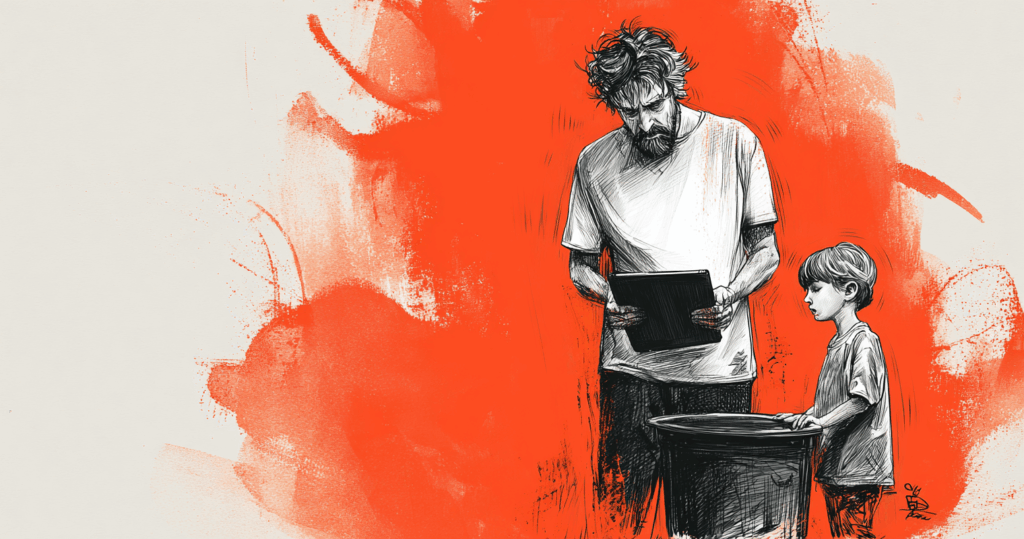
My 6-year-old had been asked to brush his teeth and put on pajamas, a reasonable bedtime routine we’d done literally hundreds of times before. But when he kept ignoring me (and ignoring, and ignoring), something shifted inside me. What started as a simple “let’s go brush teeth” escalated into increasingly dramatic consequences: “If you don’t get ready for bed RIGHT NOW, you won’t be able to use your iPad on our long trip to the beach tomorrow. In fact, I’m going to throw your iPad away!”
That’s when my wife leaned over and whispered, “You know you’re not going to throw the iPad away, so don’t suggest it.”
She was right. I wasn’t going to throw away a $300 device because my kid was stalling at bedtime. But in that moment, I’d crossed a line somewhere between “teaching moment” and “desperate threat theater.”
The truth is, I want to raise strong, respectful kids who understand boundaries and make good choices. But if I’m being honest, sometimes my ego just wants to win. And that’s where things get messy.
There’s a fine line between consequences that actually teach our kids something valuable and punishments that shut down their growth (and our relationship). Let’s try to find that line. Hopefully, we don’t trip over it the next time we’re frustrated and running on three hours of sleep.
Why We Default to Punishment (Even When We Know Better)
First, let’s acknowledge why this happens. We’re not terrible parents. We’re human parents dealing with very human impulses.
We confuse immediate compliance with long-term learning. When my daughter rolls her eyes and I snap, “Go to your room until you can show some respect,” part of me feels satisfied because she stops rolling her eyes. Mission accomplished, right? Except she’s not learning respect. She’s learning to hide her feelings better.
Our own upbringing trained most of us to equate pain with learning. Whether it was time-outs, losing privileges, or just the general message that “you need to suffer consequences to learn,” many of us absorbed the idea that effective discipline should feel uncomfortable. That programming runs deep.
And honestly? We’re tired. Explaining why hitting your brother isn’t okay for the fourteenth time this week takes energy. It’s faster to just send both kids to separate corners and enjoy sixty seconds of silence.
Sometimes, and I hate admitting this, it actually feels good to “take control.” I once sent my kid to bed early because he spilled juice on my laptop. The laptop wasn’t even damaged, but I’d had a terrible day at work. Looking back, I realize I needed someone to pay for my frustration, and he was the unlucky target. He went to bed confused about why accidents suddenly deserved punishment. That’s embarrassing to write, but I bet I’m not alone.
The Key Distinction: Consequence vs. Punishment
So what’s the difference between a consequence that teaches and a punishment that just hurts?
Punishment is reactive, power-based, and often completely unrelated to the actual behavior. It’s driven by our emotions in the moment and focuses on making the child pay for what they did wrong.
Consequence is the logical or natural outcome that helps the child understand the why behind the boundary. It’s connected to the behavior and designed to build understanding, not just compliance.
Here’s a real example from last week:
Punishment approach:
“You’re being rude at dinner? No video games for a week, and you can forget about that sleepover this weekend.”
Consequence approach:
“You’re being rude at dinner? You need to leave the table until you’re ready to rejoin us respectfully. When you’re ready, come back and we’ll continue eating together.”
The first option might stop the behavior, but it doesn’t teach anything except “Dad gets really mad when I’m rude.” The second option directly connects the behavior to its impact. If you can’t be part of the family dinner respectfully, you can’t be part of family dinner until you’re ready.
Or take the bedtime struggle from my opening story. Instead of threatening to throw away the iPad (punishment), a logical consequence would have been: “If you keep stalling to get ready for bed, we won’t have time for a story tonight since you need to be asleep by 8 p.m. for our early morning.” Same boundary, same firmness, but the consequence actually connects to the behavior and is something I could realistically follow through on.
Research on brain development (Dan Siegel has some great work on this) shows us that kids’ prefrontal cortex, the part responsible for decision-making and impulse control, isn’t fully developed until their mid-twenties. When we use punitive discipline, we’re essentially trying to force mature decision-making from an immature brain. But when we use logical consequences, we’re helping that brain practice the very connections it needs to develop.
3 Signs You’ve Crossed Into Punishment Territory
How do you know when you’ve shifted from teaching to punishing? Here are three red flags I’ve learned to watch for:
1. You’re angry and acting fast
If your heart is racing and you’re issuing consequences immediately, there’s a good chance you’re in reactive mode. When I feel my jaw clench, that’s my cue to take a breath before deciding what happens next.
2. The consequence doesn’t connect to the behavior
“You left your bike in the driveway, so no dessert tonight.” Wait, what? How does sugar restriction teach responsibility for bike storage? If you can’t easily explain the connection, it’s probably punishment.
3. You’re chasing obedience instead of building ownership
When I find myself thinking “I’ll show him who’s boss,” I’ve usually crossed the line. The goal isn’t to dominate our kids into submission. It’s to help them develop their own internal compass.
Here’s a gut-check question that’s saved me from many punishment spirals:
“Would I still choose this consequence if I wasn’t embarrassed, mad, or tired right now?”
Respectful Discipline That Actually Teaches
So what does respectful discipline look like? I’ve found the concept of being firm and kind incredibly helpful. You’re not backing down from the boundary (firm), but you’re not attacking the child’s character either (kind).
Here’s a framework that’s been game-changing for our family. I call it the R.E.A.L. Approach:
- Reflect: What am I actually trying to teach here? Not just “don’t do that again,” but what life skill or value am I hoping to develop?
- Empathize: What might be going on under this behavior? Is my child tired, overwhelmed, or just testing boundaries in a totally normal way?
- Align: Make sure the consequence actually makes sense and connects to what happened.
- Leave space: Let them process what happened without a lecture. Sometimes the consequence teaches better than our words ever could.
Last month, my son yelled “You’re the worst dad ever!” when I said he couldn’t have a friend over on a school night. My first instinct was to ground him for disrespect. Instead, I made him write me a Top 5 list of things I actually am good at as a dad. He included “making good snacks” at number 4, which honestly made my whole week. But more importantly, it got him thinking about our relationship, not just reacting to it.
What Long-Term Growth Really Looks Like
Something that took me way too long to understand: the goal isn’t perfect behavior. Perfect behavior from kids usually means they’re either scared or they’ve stopped trying to figure things out for themselves.
What we’re really after is gradually increasing ownership. We want our kids to develop their own internal motivation to make good choices, not just fear of getting caught.
When we discipline with respect (focusing on teaching rather than dominating), we’re modeling the exact emotional regulation and problem-solving skills we want them to develop. Every time we stay calm when they’re losing it, we’re showing them what emotional maturity looks like.
Discipline means to teach.
Not to punish. Not to dominate. Just… to teach.
What to Do When You Blow It (Because You Will)
Let’s be honest. You’re going to lose your cool sometimes. You’re going to hand out consequences that make no sense, or react from a place of anger instead of wisdom. I’ve threatened to throw away Halloween candy in February and told my kids they were grounded from “fun” for the rest of their lives.
When this happens, own it. Out loud. In front of them.
“Hey buddy, I overreacted earlier when you spilled that juice. Taking away your bike for a week wasn’t fair, and I was just frustrated. I’m sorry. Let’s figure out a better way to handle accidents together.”
This does two powerful things. It models repair and emotional accountability, and it teaches them that discipline applies to everyone, including parents.
Last week I apologized to my daughter for snapping at her about homework when I was really just stressed about work. She forgave me instantly, then immediately tried to negotiate a later bedtime “since you feel bad and everything.” Stay alert, dads. They’re always strategizing.
Leading With Respect, Not Control
Here’s what I’m learning. Discipline isn’t a battle to win. It’s a relationship to grow.
When we shift from trying to control our kids to coaching them, everything changes. Instead of asking “How do I make them stop doing this?” we start asking “How do I help them understand why this matters?”
The goal isn’t raising obedient kids who do what we say because they’re afraid not to. The goal is raising accountable, thoughtful humans who can navigate the world with wisdom and integrity, even when we’re not around to tell them what to do.
That means sometimes accepting that they’re going to test boundaries, make mistakes, and yes, even be disrespectful while they’re learning. Our job isn’t to eliminate all challenging behavior. It’s to guide them through it in a way that builds character, not just compliance.
Next time your kid messes up (and there will be a next time), try asking yourself:
“Am I trying to control them or coach them?”
The answer might change everything about how you respond.
Because at the end of the day, the respect we show them while they’re learning is the same respect they’ll show others when they’re grown. And honestly, that’s the kind of legacy worth working toward, even if it takes a little longer than just sending them to their room.
The Focused Fool Newsletter. Growing As Men. Leading As Fathers.
Leave a Reply